Guides · Updated September 21, 2026
The Short Answer
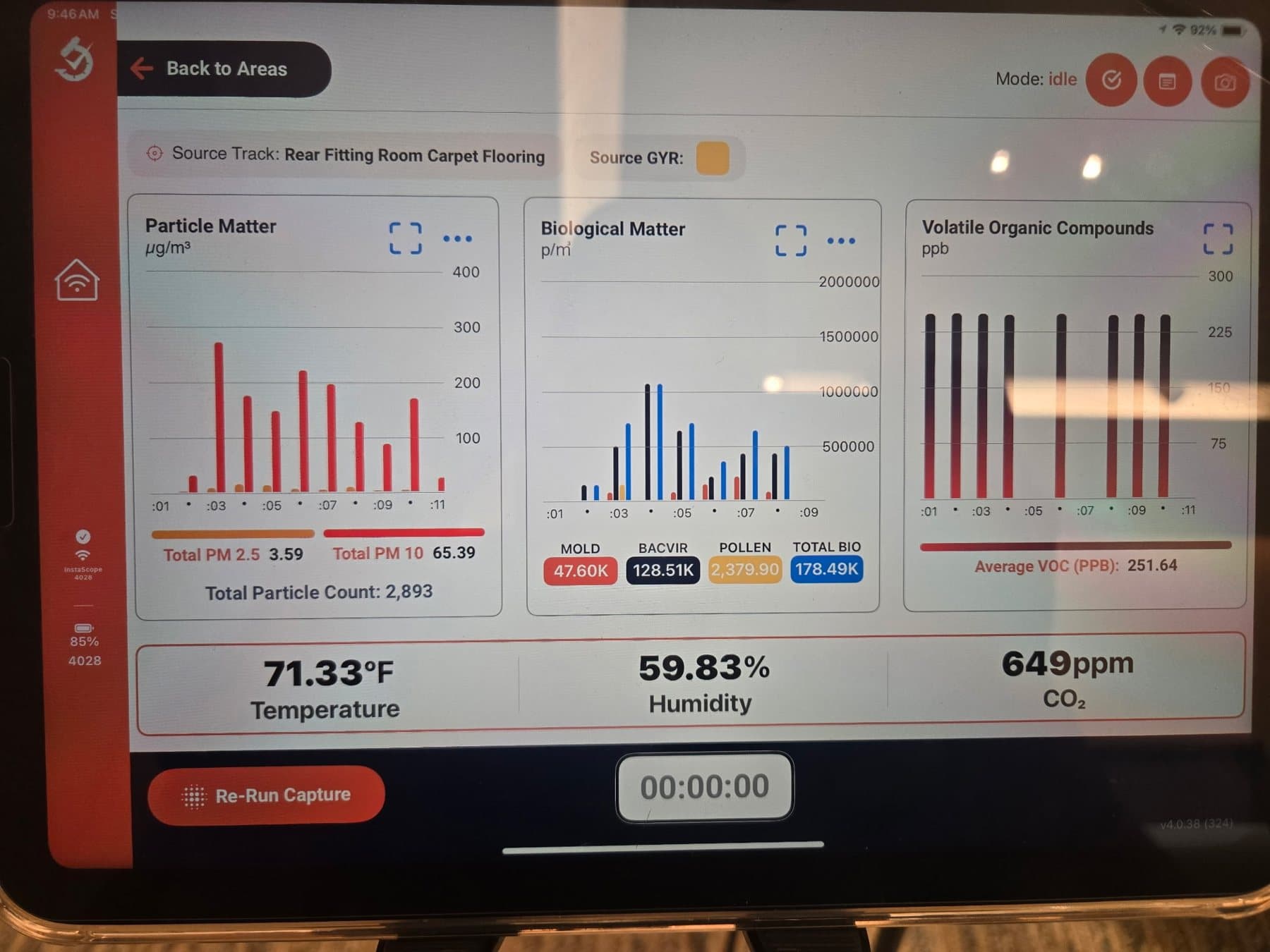
InstaScope is a portable instrument made by DetectionTek that reads the air in real time. It sorts airborne biological particles into mold, bacteria and pollen, and reports particulate matter, volatile organic compounds, carbon dioxide, temperature and humidity alongside them. It shows during the visit whether a room is elevated compared with outdoors. It does not replace a laboratory: naming a species and documenting it for a claim still takes accredited lab analysis.
What It Measures
The screen groups its readings into three panels. Particle matter covers fine and coarse particles, the PM 2.5 and PM 10 figures. Biological matter separates mold, bacteria and pollen and gives a total. Volatile organic compounds are reported in parts per billion. Temperature, humidity and carbon dioxide run along the bottom.
Readings are continuous, so moving the instrument from room to room shows changes as they happen rather than days later.
How Mold Shark Uses It
Every survey starts with an outdoor baseline. Each room is then read against it. A room that stands well above outdoors gets a closer look: moisture readings, thermal imaging and, where the evidence justifies it, air or surface samples for the laboratory.
The practical value is direction. The instrument narrows a whole building down to the rooms and surfaces worth sampling, so lab samples are placed where they will answer a question.
What It Does Not Do
It does not identify species. It cannot tell Stachybotrys from another mold. It does not produce a chain-of-custody laboratory certificate, which is what insurers, attorneys and buyers usually ask for. And there are currently no EPA regulations or standards for airborne mold contaminants, so no reading is an official pass or fail on its own.
That is why real-time readings and laboratory analysis are used together, not one instead of the other.
When It Matters Most
Real-time readings earn their place when time or scale is the problem:
- 01Real estate deadlines, where a same-visit reading tells a buyer whether to dig further.
- 02Clearance visits, to find lingering hotspots before samples are taken.
- 03Large or commercial spaces, where sampling every room would be slow and costly.
- 04A musty smell with no visible source, to narrow down where it is coming from.