
Mold Inspection In
Lakewood Park
Mold Shark inspects and tests for mold across Lakewood Park, from the acreage lots off Kings Highway to the pond-backed streets near Indrio Road. Every visit pairs a room-by-room walkthrough with moisture mapping and thermal imaging, plus an InstaScope reading on site when it helps narrow things down. Samples go to an accredited third-party lab, and the report comes back in plain language you can hand to a contractor, adjuster, or buyer.
Local Conditions
What Drives Moisture In Lakewood Park.
Lakewood Park is not one housing stock, it is three of them sitting on the same street, and each one fails differently. The older concrete block houses give way slowly at the edges: hairline stucco cracks, open soffit returns, and window heads that let wind-driven rain track into the wall instead of running off it. Manufactured homes fail from underneath, where a torn belly board, damaged skirting, or a supply duct running below the floor puts humid outside air against a cool cavity. The newer energy-tight builds fail last and hide it longest, because a sealed envelope holds whatever moisture gets past it. That is why the inspection starts with how the house was built, not with a moisture meter.
Water out here rarely arrives as a burst pipe. It arrives as an afternoon thunderstorm that parks over the community, as a tropical system that pushes rain sideways for a day, and as the standing humidity that sits over the ponds and lakes threaded through Lakewood Park for most of the year. Lots that back onto water, and the low corners of the bigger acreage parcels, stay damp underfoot long after the pavement dries, and those homes run higher ground-level humidity than a house two streets inland. Roof penetrations are the other slow entry point: vent boots, flashing, and low-slope carport or patio additions can wet a ceiling cavity for months before anything shows on the drywall.
Because the humidity holds through most of the calendar here, the air handler is the busiest piece of moisture equipment in a Lakewood Park home. A system sized for the hottest week of August satisfies the thermostat quickly the rest of the year, runs short cycles, and does not pull the moisture down with it. That shows up as sweating registers at the end of the longest duct run, a laundry room that stays damp, and a closed guest room that smells different from the rest of the house. Those rooms are what I ask about first, and they are usually where the first sample gets taken.
Areas Covered
- 01Kings Highway
- 02Indrio Road
- 03Fort Pierce Boulevard
- 04Emerson Avenue
- 05Lakewood Park Acreage Lots
- 06Neighborhoods Toward the Fort Pierce Line
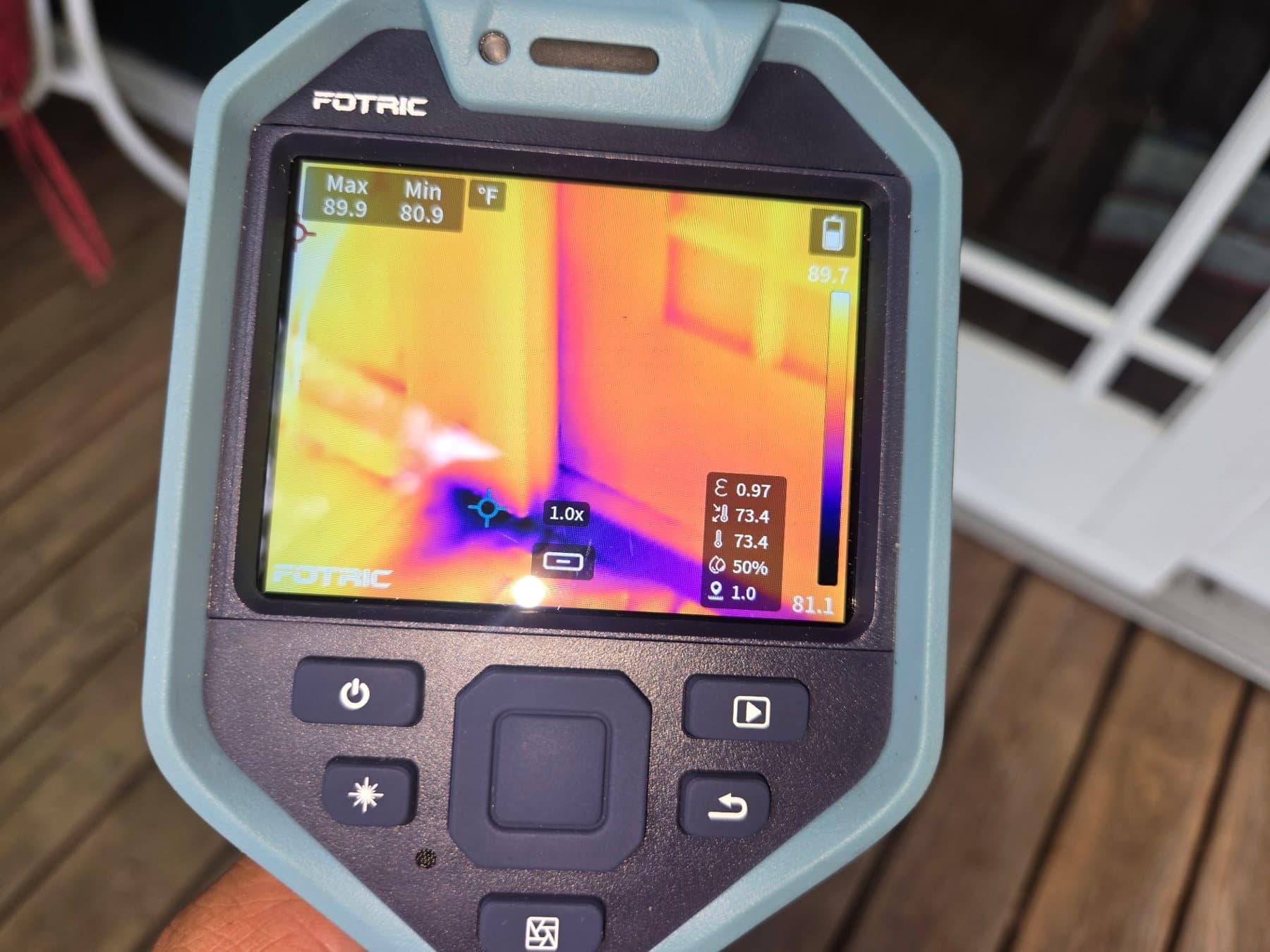
Where We Look First
The Places It Usually Starts.
01
HVAC Closets and Air Handlers
The interior closet holding the air handler is where the most staining turns up: a slow drain pan overflow or a sweating plenum wets the closet wall and the baseboard of the bedroom behind it before anyone thinks to open the door.
02
Laundry Rooms
A dryer vent that has pulled loose inside the wall cavity, or a run too long for the appliance to clear, pushes warm wet air into the framing instead of outside.
03
Bathrooms and Exhaust Fans
Fans ducted into the attic rather than out through the roof put shower moisture straight onto the underside of the sheathing, which reads cold and wet on thermal imaging well before the ceiling stains.
04
Older Sliding Glass Doors
Sliders on the original block houses out here have often lost the sill seal, and the track weeps clog with sand, so driven rain backs up into the subfloor at the threshold.
05
Soffits, Window Heads, and Stucco Cracks
Summer storms drive rain into hairline stucco cracks and open soffit returns, and the water travels down inside the wall before it surfaces as a stain two or three feet from where it got in.
Testing And Air Quality
Mold Testing & Air Quality In Lakewood Park.
Mold Testing In Lakewood Park
Air and surface samples from your Lakewood Park property go to an accredited laboratory under chain of custody. The report names the species present, including Stachybotrys, the one most people mean by black mold, and gives the counts against an outdoor baseline. Certified results come back in 24–48 hours.
How Mold Testing WorksAir Quality Testing In Lakewood Park
When the concern goes beyond mold, we test indoor air for VOCs, formaldehyde and bacteria, and run ERMI or mycotoxin panels when the result would change a decision. The plan is built on what the walkthrough found, not a shotgun panel.
See Indoor Air Quality TestingYour Mold Inspector, Never Your Remediator
Mold Shark is the licensed mold assessor in the process, not the cleanup crew. We do not perform mold removal or remediation in Lakewood Park or anywhere else. If the property needs it, you take our written findings to any remediation company you choose, and we can return afterwards to verify the work.
Read This Before Hiring A RemediatorWhat We Run
Services Available In Lakewood Park.
Also available in Lakewood Park: HVAC Mold Inspection, Tenant & Landlord Reports, Black Mold Testing, Moisture & Thermal Imaging, Real Estate Inspections, Before Mold Remediation.
Questions
Lakewood Park Questions, Answered.
No, and that is deliberate. Mold Shark holds both a Florida Mold Assessor license (MRSA3341) and a Mold Remediator license (MRSR3507), and still never performs remediation. That is a choice, not a limitation, and it is the whole reason our findings carry no conflict of interest. Under Florida Statute 468.8419 a licensed assessor may not remediate a structure they assessed within the previous 12 months. Holding the remediator license means we know what the cleanup actually involves and can read a contractor's scope and pricing properly. If the answer is a plumbing leak and no mold problem, that is what the report says.
Nearby
Close By, Same Standard.

Know What You're Breathing.
Certified inspection, lab-certified results in 24–48 hours. Independent. We never sell the repair.
FL Mold Assessor MRSA3341 · Testing Only · We Never Perform Remediation

- LAB RESULTS
- 24–48 HOURS
- TESTING HOURS
- Mon–Fri · 8:00am – 5:00pm
- CALL OR TEXT
- 7 Days A Week · 24 Hours
- COVERAGE
- 7 COUNTIES · TWO COASTS
- LICENSED
- FL MOLD ASSESSOR MRSA3341
- Google Maps
- 5.0 ★ · 86 REVIEWS